
Mohammad Abdul Baten Bhuyain
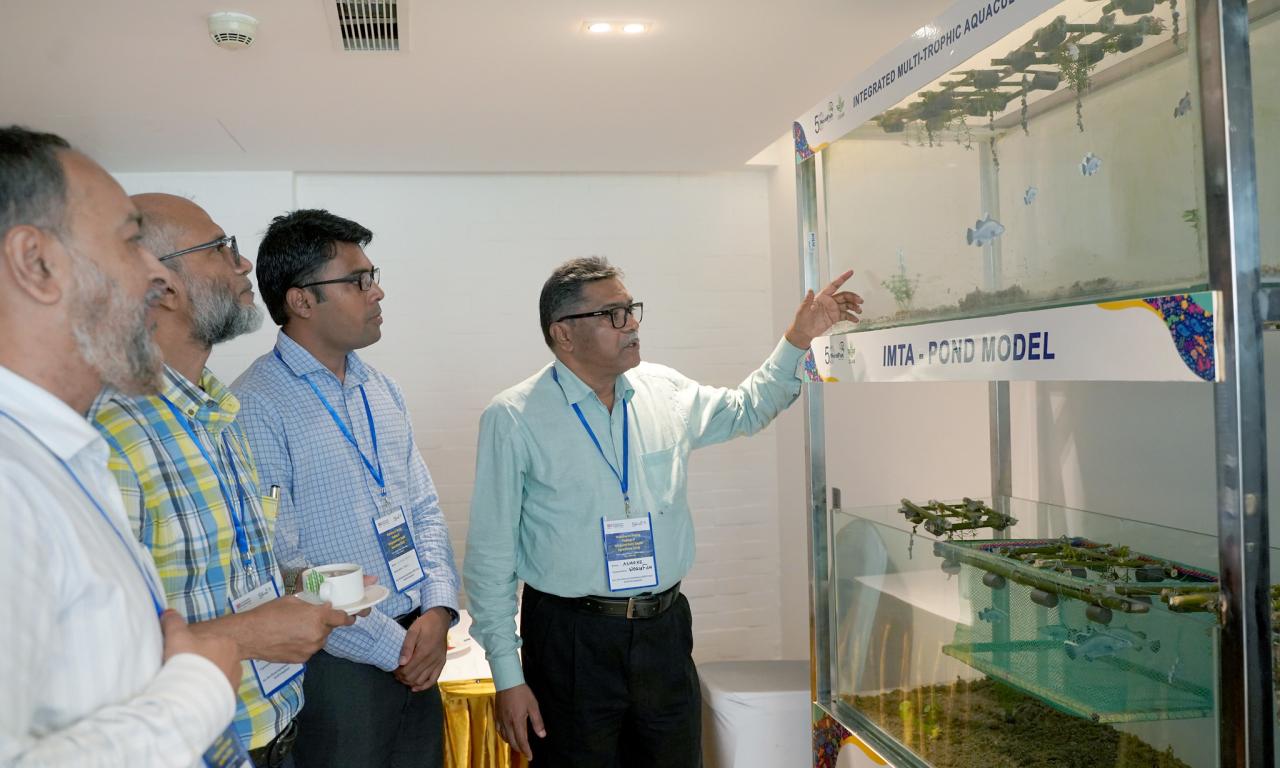
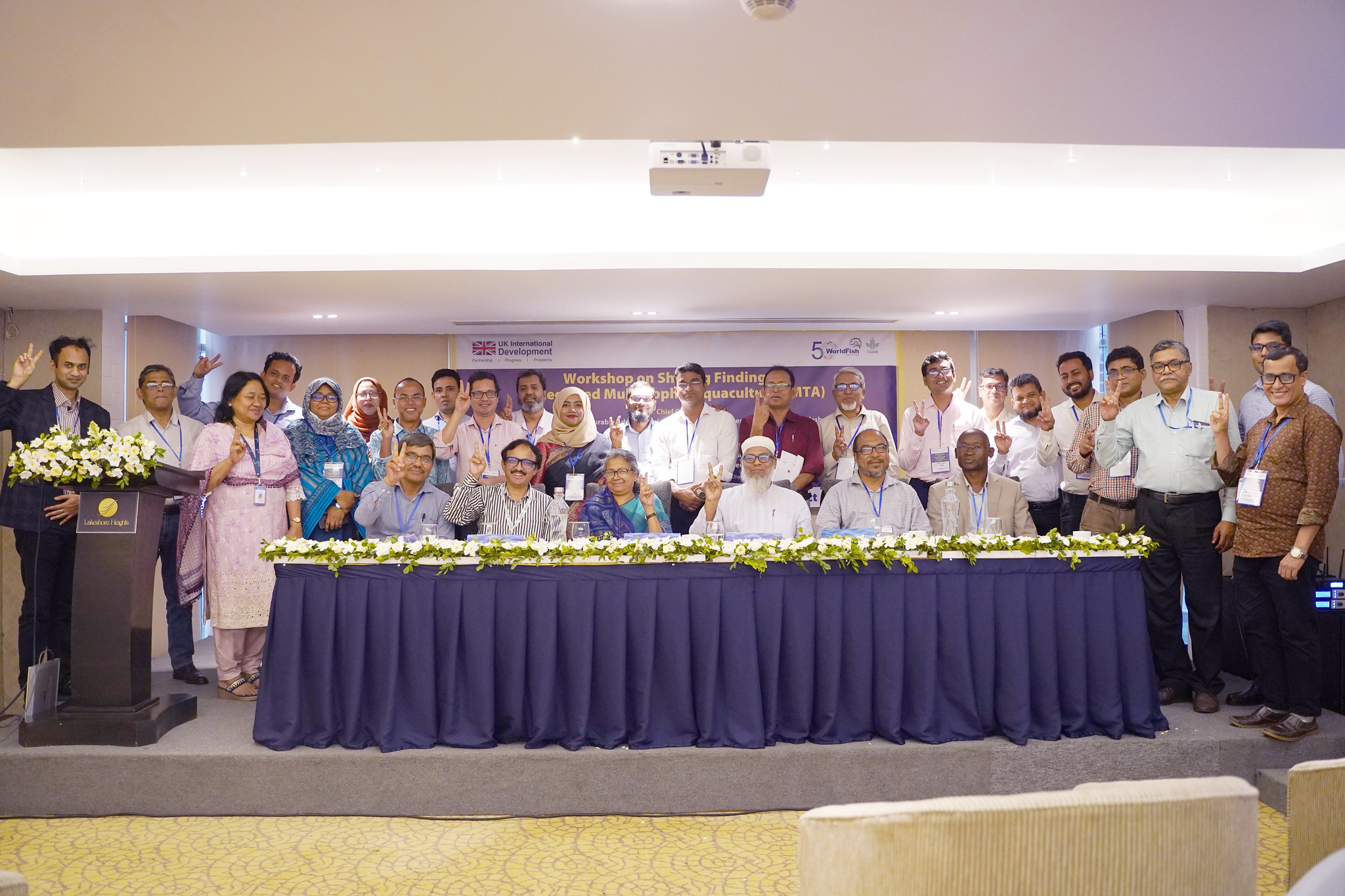
Bangladesh is exploring Integrated Multi-Trophic Aquaculture (IMTA) as a sustainable solution for coastal aquaculture. In 2025, a key workshop in Dhaka, bought together 57 participants, including government officials, researchers, academics, the private sector, and international delegates from Kenya and Cambodia to explore the potential of IMTA and develop strategies for its expansion in Bangladesh’s coastal regions.
The workshop aimed to:
- Share findings from IMTA trials and assessments in Bangladesh’s coastal areas.
- Engage experts in formulating actionable strategies for sustainable coastal aquaculture.
- Promote broader awareness and understanding of IMTA-based aquaculture systems among stakeholders.
The workshop was held under the Asia–Africa BlueTech Superhighway (AABS) project, funded by the UK Government.
IMTA: Boosting Productivity While Protecting the Environment
Integrated Multi-Trophic Aquaculture (IMTA) is a sustainable aquaculture system that integrates fed species like shrimp and finfish with extractive species such as seaweed, bivalves, and aquatic plants. This approach optimizes resource use and enhances water quality, boosts productivity, and increases profitability while minimizing environmental impacts.
Key Findings from IMTA Trials
The workshop highlighted results from pond and nearshore IMTA trials conducted in Khulna and Cox’s Bazar by research partners Chattogram Veterinary and Animal Science University and Khulna University.
- Cox’s Bazar: Pond-based seaweed cultivation showed higher productivity under IMTA than monoculture. Seaweed (Gracilaria sp.) biomass reached 62.6 kg in IMTA ponds versus 51.6 kg in monoculture. Nearshore IMTA systems produced 900 kg of Gracilaria sp. and 1,000 kg of Ulva lactuca, compared to 792 kg and 800 kg, respectively, in monoculture.
- Khulna: Pond-based IMTA with shrimp as the fed species outperformed non-IMTA polyculture ponds economically. The highest net return from IMTA ponds was BDT 302,804 per hectare per year (USD 2,502), while control ponds yielded only BDT 46,767 (USD 386). IMTA systems achieved a benefit–cost ratio (BCR) of 2.20, compared to 1.19 for controls.
- In a prawn-based IMTA trial in Khulna, integrated systems were 18–33% more profitable than conventional systems. The IMTA system achieved the highest net profit of BDT 400,800 (USD 3,312) and a BCR of 1.174, outperforming non-IMTA ponds.
The workshop also shared findings from four complementary studies, including environmental and climate assessments, value chain analyses, situational analysis, and site suitability assessments for IMTA across coastal regions such as Khulna, Satkhira, Bagerhat, Patuakhali, and Cox’s Bazar.
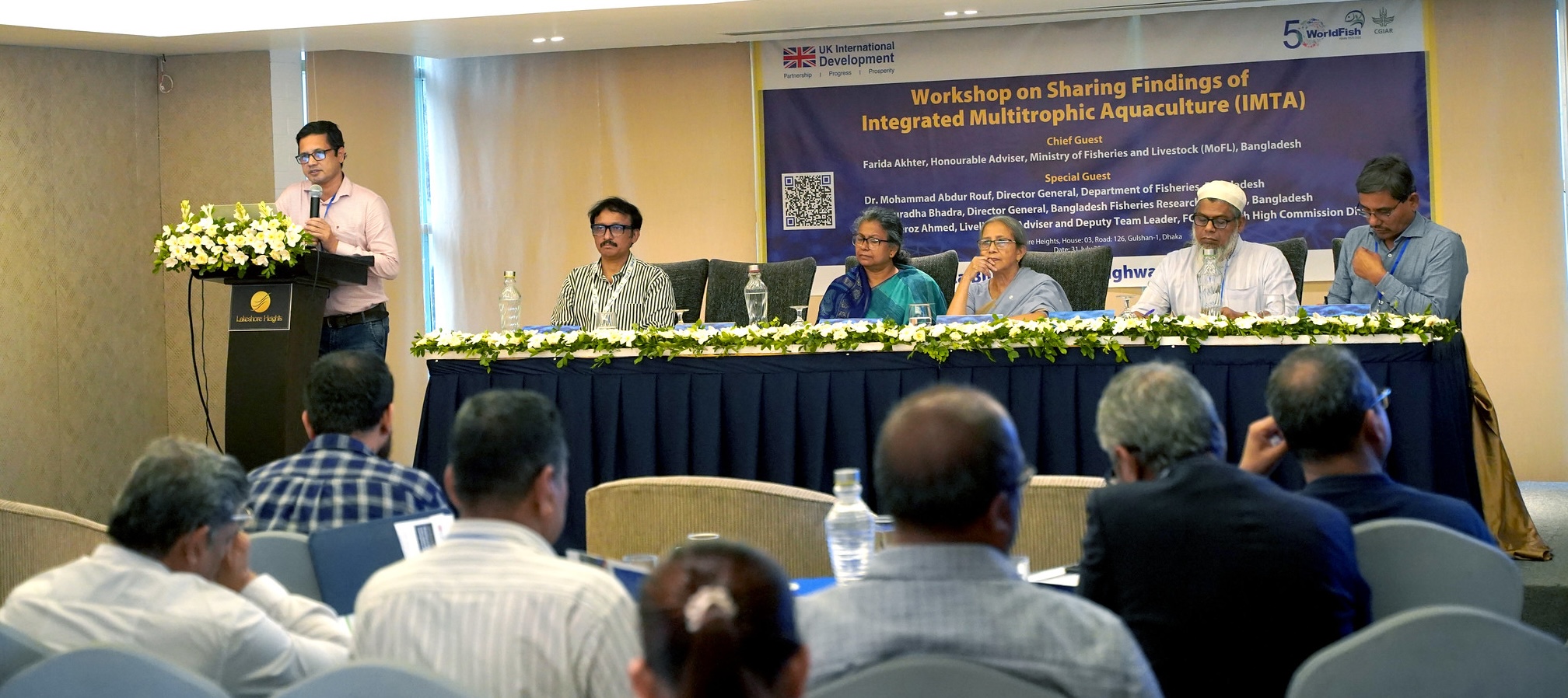
Government Partnership in Advancing IMTA for Sustainable Aquaculture
Government support is critical to ensure policy alignment, provide infrastructure, and facilitate the scaling of IMTA nationwide. Department of Fisheries officers have been actively supporting project farmers, including field visits to their ponds.
Dr. S. M. Rezaul Karim, Director (Admin), Department of Fisheries, said:
"Integrated Multi-Trophic Aquaculture (IMTA) offers a sustainable solution for boosting productivity and ecological balance in both coastal pond systems and marine environments. As policymakers, we take these findings seriously. I am encouraged by the data and the collaborative spirit that this workshop embodies. Let today’s workshop be more than an academic gathering; let it be the beginning of lasting transformation."
Key Recommendations from the Workshop
Discussions during the workshop identified several key priorities for advancing IMTA in Bangladesh including;
- Strengthen policy frameworks to embed IMTA in coastal aquaculture
- Scale-up farmer training and demonstration sites
- Advance market development and value chains for seaweed and bivalves
- Develop national IMTA guidelines and certification systems
- Foster stronger public–private partnerships
- Establish marine finfish hatcheries, tissue culture labs, and ensure availability of feeds
Government representatives, including the Ministry of Fisheries and Livestock (MoFL), reaffirmed their commitment to promoting IMTA as part of sustainable aquaculture. With strong partnerships and policy support, IMTA can help Bangladesh strengthen coastal livelihoods, boost food security, and position itself as a regional leader in sustainable blue growth.
IMTA Benefits and Opportunities
The workshop highlighted the potential of IMTA to integrate fed species (finfish: Lates calcarifer, Labeo rohita, Liza parsia, Mystus gulio; shrimp: Penaeus monodon; prawn: Macrobrachium rosenbergii) with extractive species (bivalves: Perna viridis, Crassostrea madrasensis, Lamellidens marginalis; snails: Pila globosa, Telescopium telescopium; seaweed: Gracilaria sp., Ulva lactuca; aquatic plants: Najas indica). IMTA systems improve water quality, productivity, profitability, and carbon sequestration potential. Seaweed and bivalve value chains offer opportunities to diversify livelihoods and contribute to the blue economy.
Challenges Identified
- Limited availability and quality of seed and feed
- Underdeveloped and unstructured value chains for seaweed and bivalves
- Weak market systems
- Policy gaps and limited institutional support
Call to Action
To advance IMTA in Bangladesh, it is essential to establish a multi-stakeholder platform that brings together government agencies, research institutions, private sector actors, NGOs, and community representatives. Pilot IMTA farms should be launched in priority coastal regions such as Khulna and Cox’s Bazar to serve as learning hubs, providing hands-on farmer training on species integration, pond management, and sustainable practices.
Market linkages for high-value species like seaweed and bivalves must be promoted through private sector partnerships, alongside the establishment of depuration protocols for bivalves in collaboration with BFRI to ensure food safety. Research and development efforts should focus on species compatibility, stocking densities, and ecosystem interactions in both pond and marine IMTA systems. Finally, scaling and institutionalization can be achieved by integrating IMTA into national extension programs and supporting Farmer Field School models and input hubs to reduce costs and improve farmers’ access to resources.
Bangladesh is taking decisive steps toward climate-resilient aquaculture through IMTA. The workshop united government, researchers, and stakeholders to set a clear path for sustainable coastal livelihoods and healthy ecosystems.
Cover photo: Participants looking at an Integrated Multi-Trophic Aquaculture (IMTA) pond model during a WorldFish Bangladesh workshop in Dhaka. Photo: Dilruba Sharmin/Shohorab Hossain/WorldFish.