
Mary Lundeba

Gregory Kasanga
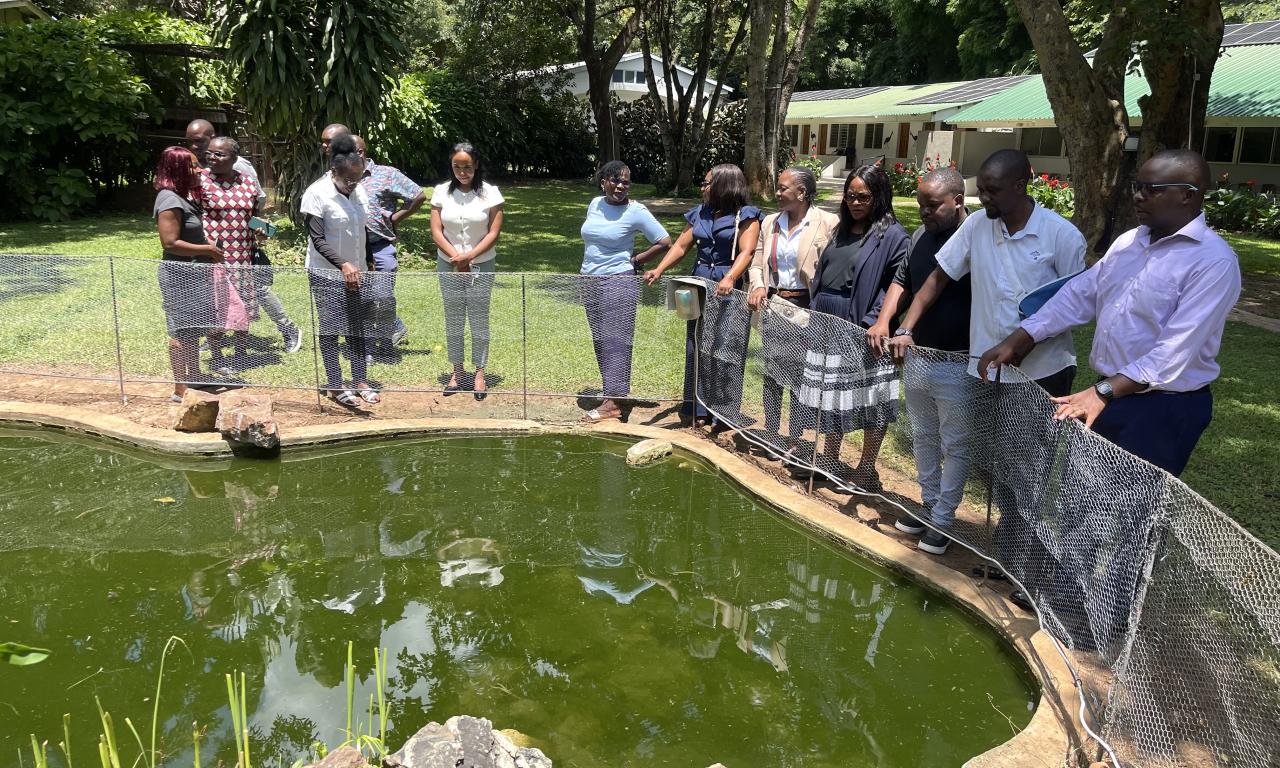
When participants gathered in Zambia for a Training of Trainers workshop under the Development and Scaling of Sustainable Feeds for Resilient Aquatic Food Systems in Sub-Saharan Africa (FASA) project, they began by discussing the story of Chileshe.
Chileshe had improved feed practices on her fish farm. Yet when a training opportunity arose, the invitation went to her husband. He controlled household resources and he attended the workshop, and when he returned, he didn’t share what he had learned.
This was not only unfair to Chileshe, it was economically damaging. The household lost income potential, and the cooperative missed out on innovation.
For many in the room, the story felt familiar. One participant said the training reshaped how he thinks about collaboration within family-run aquaculture enterprises.
“Personally, I learned how to best handle family projects with my wife and how women can be innovative if fully involved in decision making.”
— Enock Moonga, Acacia Farms
Who Decides and Who Benefits?
From 25 to 27 February 2026, twenty participants, ten women and ten men, including aquaculture practitioners, extension officers, researchers, lecturers, SME feed millers, and cooperative leaders gathered to explore how inclusion and productivity intersect across aquaculture value chains.
The training focused on the social dynamics that shape who learns, who decides, and who benefits within small-scale aquaculture households, particularly in relation to access to training, productive resources, and decision-making power.
Using the Inclusive and Productive Aquaculture Ecosystems Facilitator’s Manual developed by Includovate, discussions moved beyond theory into honest reflection on power, voice, and household decision-making. The training was facilitated by Alemi Desta, Associate Researcher at Includovate.
The training began with a simple but powerful idea: fish farms do not operate in isolation. They are part of broader household and cooperative ecosystems. Through an exercise “Who’s on your farm?”, participants mapped who contributes to household activities, farm work responsibilities, financial management, and decision-making. Many acknowledged that women often manage daily home operations yet are underrepresented in formal training and leadership spaces.
Participants reflected that this imbalance shapes who controls resources, who speaks in meetings, and whose knowledge is valued. This early reflection challenged assumptions about authority and expertise within aquaculture enterprises.
Returning to Chileshe’s story, participants observed that prevailing gender norms often determine who receives opportunities. Contributors noted that Chileshe’s husband had more control over resources and denied her the opportunity to grow the enterprise. When he returned and failed to share knowledge, he created a gap that limited business improvement.
Practical solutions emerged from the discussion. Extension officers should apply fair and context-sensitive criteria when selecting trainees by engaging households in dialogue and identifying who actively manages the enterprise. Joint or rotational attendance was recommended to prevent knowledge gaps. Additionally, participants emphasized the need to create inclusive training spaces through structured participation, small group discussions, and intentional invitations for marginalized members to contribute.
For extension officers in the room, the discussion reinforced the importance of making training spaces genuinely inclusive.
“During a training, we must make sure that every participant regardless of gender participates and that their views are heard.”
— Sonjiwe Akufuna, Department of Fisheries
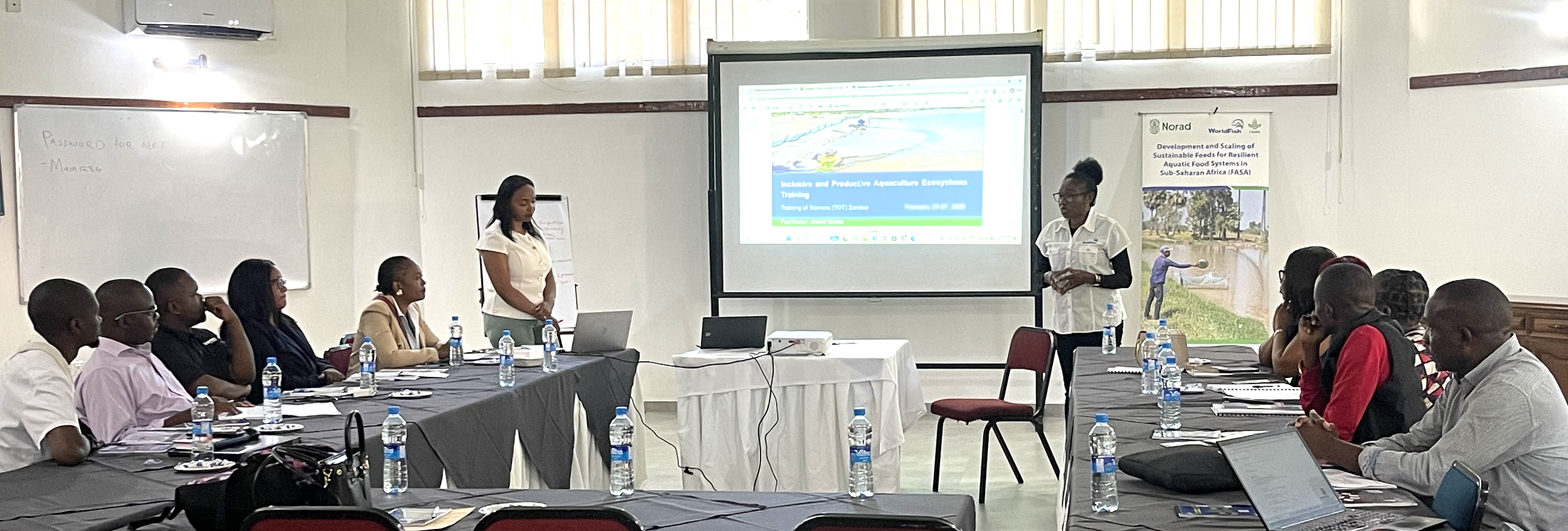
The training further explored household cooperation, conflict, and resource competition. In discussing two contrasting household scenarios, participants identified key lessons. In one they noted poor communication, unequal resource control, and gender-based violence, all shaped by rigid gender roles. These factors led to conflict, reduced productivity, and emotional harm.
Participants noted that when one partner dominates decision-making and dismisses the spouse’s ideas, the enterprise suffers. In contrast, the other scenario illustrated cooperation and mutual respect. Participants highlighted open communication, shared opportunities, and joint decision-making as drivers of higher productivity. They observed that when both partners contribute ideas and plan together, enterprise performance improves significantly.
Others reflected on how inclusive participation can directly influence innovation and productivity within aquaculture enterprises.
“Inclusive participation influences access to resources, innovation and adoption, strengthening both gender equity and economic outcomes within household enterprises.”
— Manfred Bwalya, Aqua 360
Building More Inclusive Aquaculture
A significant portion of the training examined masculinities and leadership norms in aquaculture spaces. Through role-play exercises simulating cooperative meetings, participants analysed how women, youth, and new members are often sidelined. They reflected that leadership should not be about control, but about listening and guiding collective decisions. Participants emphasized empowering men with knowledge to embrace positive leadership qualities such as fairness, strategic thinking, and inclusivity.
Recommendations included rotating facilitation roles, setting inclusive ground rules, and diplomatically encouraging broader participation while remaining sensitive to cultural contexts.
The final sessions focused on shared planning and collaborative goal setting. Participants made groups of artificial couples and mapped responsibilities for feed sourcing, production targets, and financial decisions in households. It was noted that shared planning and collaborative goal setting transform fish farming and other farming enterprises from fragmented household activities into coordinated family enterprises. When responsibilities for feed sourcing, financial decisions, and production targets are clearly mapped and when women are actively included in decision-making, households experience higher productivity, improved profitability, reduced conflict, stronger resilience and meaningful gender inclusion.
As the training concluded, participants committed to practical actions: improving extension approaches, ensuring the primary fish manager is engaged in technical discussions, and strengthening inclusive governance within cooperatives.
The Zambia Training of Trainers workshop reaffirmed that inclusive aquaculture is productive aquaculture. When women’s innovations are valued, men lead inclusively, and households and cooperatives embrace dialogue and fairness, productivity and resilience grow together.
In smallholder aquaculture systems, productivity is not only a technical issue, it is also a social and governance issue within the household. Strengthening collaboration at that level is a powerful driver of both economic and gender-equitable outcomes.
Cover photo: Participants at the Training of Trainers workshop in Zambia discuss how inclusion, decision-making and household dynamics influence productivity in small-scale aquaculture systems. Photo: Gregory Kasanga/WorldFish.