
Shafiq Rheman

Sabrina Hossain

Abdullah-Al-Mahmud

David Verner-Jeffreys
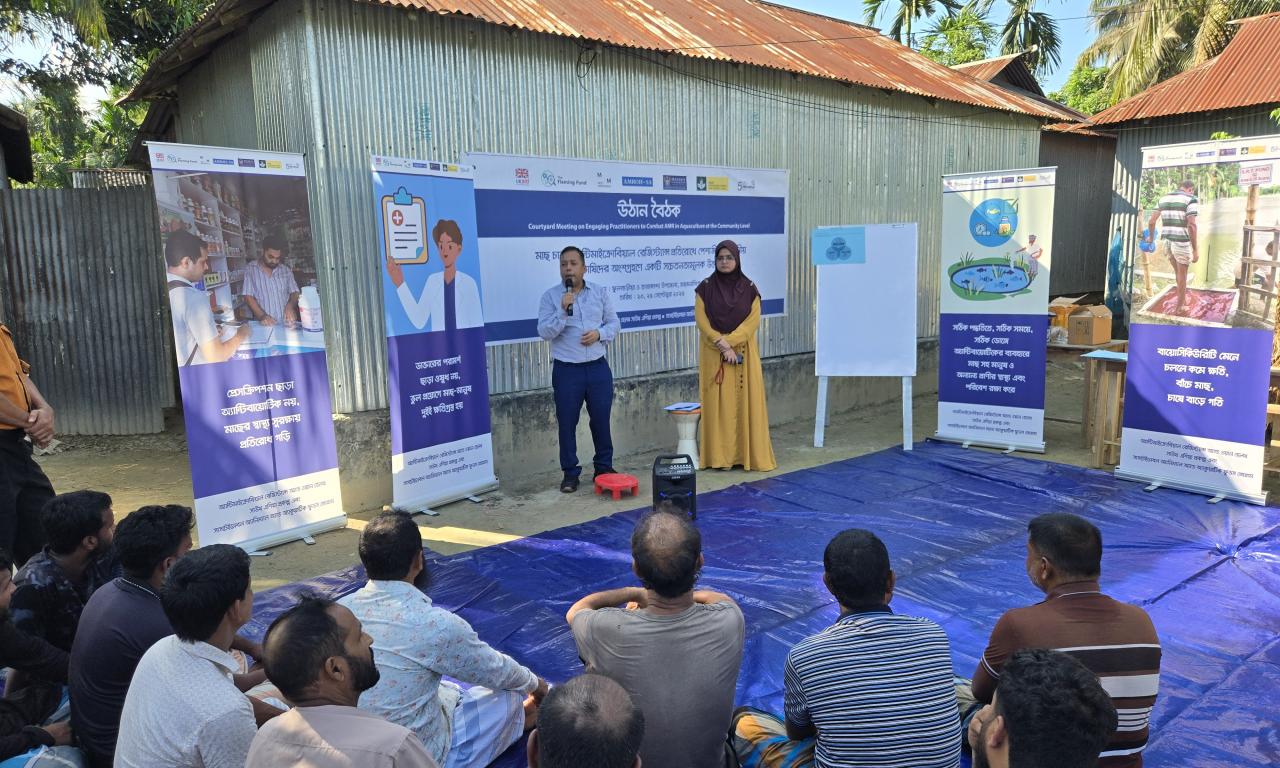
- A people-centric community-based antimicrobial resistance (AMR) intervention was piloted in Mymensingh, engaging fish farmers and practitioners to promote responsible antimicrobial use (AMU) and strengthen AMR containment.
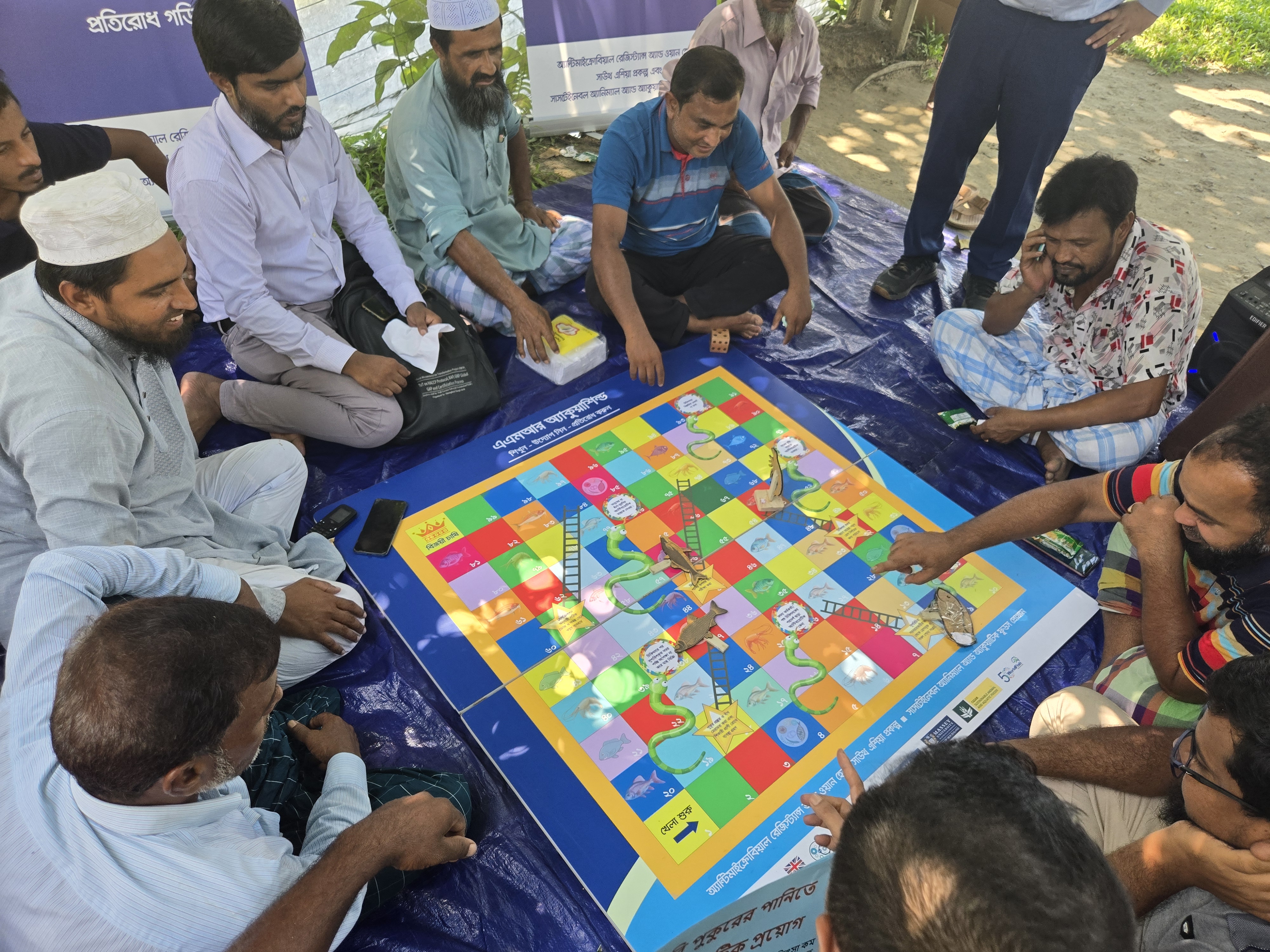
- An innovative learning tool, the AMR AquaShield Snakes and Ladders game was deployed to transform AMR education into an interactive experience, helping farmers grasp practical biosecurity and fish health management practices.
- The intervention fostered collaboration among farmers, veterinarians, agrovets, and fisheries officers, laying the foundation for community-driven AMR control and sustainable aquaculture.
The misuse and overuse of antimicrobials in aquaculture drives the development and spread of AMR pathogens, making antimicrobial stewardship (AMS) vital for ensuring antimicrobials are used responsibly and effectively. Resistant bacteria and antimicrobial residues can easily circulate through water, sediment, and the food chain, posing risks to both ecosystems and communities.To reduce unnecessary antimicrobial use and enhance AMR containment efforts in aquaculture, community-based, people-centric approaches can play a powerful role in strengthening local capacity to manage fish health effectively, while fostering knowledge-sharing networks among fish health actors such as fish farmers, veterinarians, medicine sellers, and fisheries officers who serve the community.
Implementing the Practitioner Engagement Program
WorldFish, in collaboration with Massey University, implemented the Practitioner Engagement Program (PEP) in Fulbaria and Tarakanda upazilas, Mymensingh, Bangladesh in September 2025. The pilot intervention was designed to promote AMS in aquaculture through participatory learning, linking science, policy, and practice. This initiative was supported by the UK government-funded Fleming Fund Antimicrobial Resistance and One Health- South Asia (AMROH-SA) Regional Grant and CGIAR’s Sustainable Animal and Aquatic Foods Program (SAAF).
Each meeting gathered fish farmers, medicine sellers, veterinarians, and local Department of fisheries officers to discuss practical approaches for disease prevention, biosecurity, and the responsible use of antimicrobials.
Strengthening Biosecurity and Disease Prevention Knowledge
Biosecurity and disease prevention are key pillars of AMR containment. Through participatory discussions and visual aids, participants learned about effective biosecurity and disease prevention measures. Facilitators engaged farmers in discussions using real-life illustrations from local farming practices and common fish health management challenges to illustrate how preventive actions, such as good aquaculture practice, improving fish health management and applying One Health approach in aquaculture, can help reduce disease outbreaks and minimize the need for antibiotics.
Interactive Learning through AMR AquaShield Game
A highlight of the PEP was the implementation of the AMR AquaShield Snakes and Ladders game, designed and developed as a learning and communication tool to enhance community awareness and understanding of AMR. The game transformed complex AMR risk concepts into an engaging learning experience. Players advanced on the board by answering questions correctly on topics, such as responsible AMU, good aquaculture practices, and biosecurity measures. The game fostered friendly competition, allowing participants to internalize key lessons through play.
Farmers commented that the game made “learning about AMR fun, memorable, and practical.”
Water Quality Management to Reduce AMR Risks
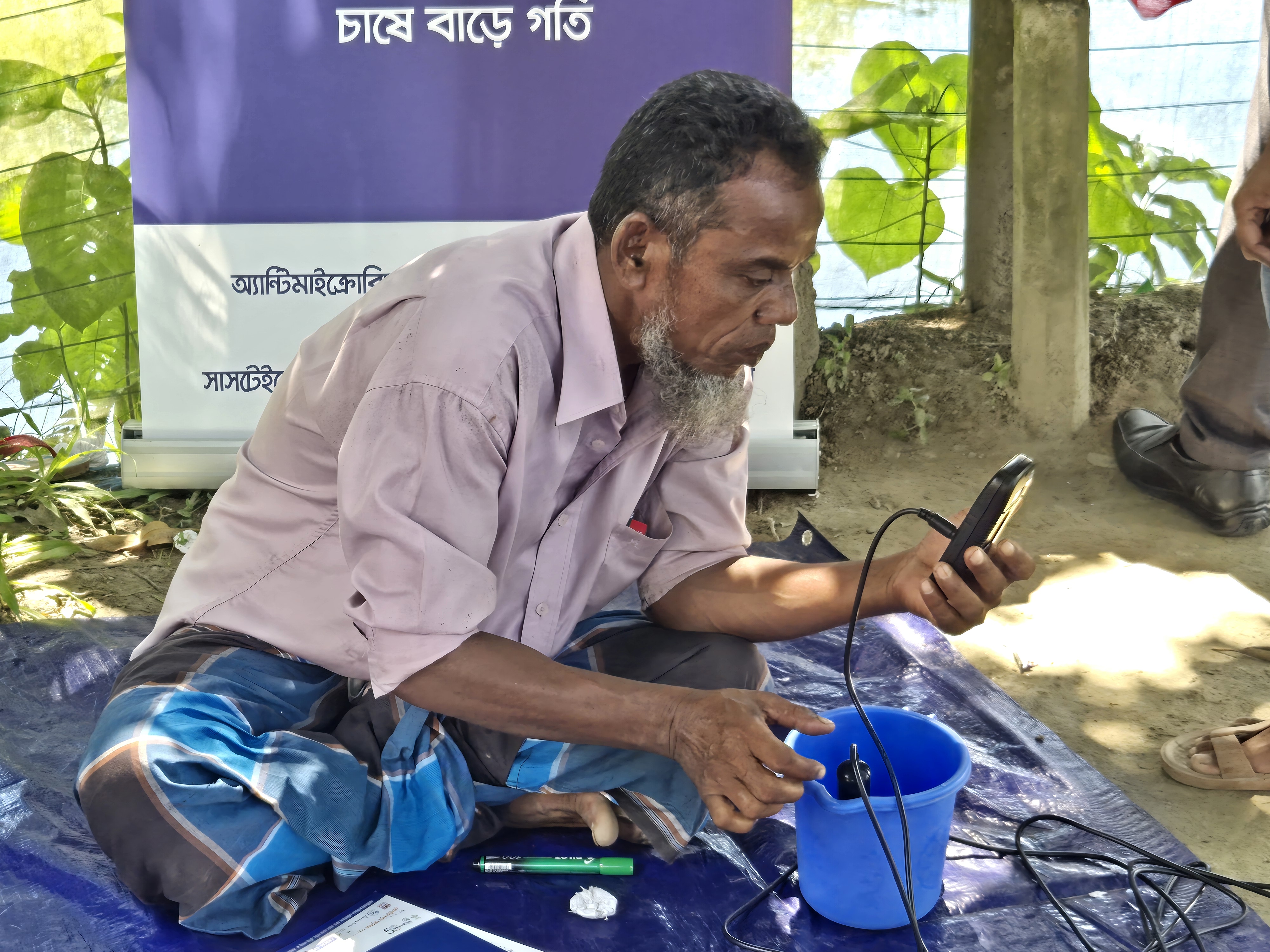
To emphasize the role of environmental health in AMR control, a water quality testing demonstration was conducted at the end of the program. Facilitators explained how poor water quality often leads to disease outbreaks, which in turn increases AMU. Participants learned to measure essential water quality parameters, such as pH, dissolved oxygen, turbidity, and ammonia using portable equipment and rapid test kits. Farmers also received a water quality testing manual with simple, step-by-step instructions to help them routinely monitor and manage pond water conditions. Through hands-on demonstrations, participants understood the direct link between healthy aquatic environments and reduced dependency on antibiotics, reinforcing the One Health principle that connects environmental, animal, and human health.
Strengthening Collaboration for AMR Containment
Feedback from farmers and local fisheries government officials highlighted the effectiveness of participatory learning. The fisheries officers expressed appreciation for the approach, noting that such programs “bridge the gap between science and practice through coordinated action on critical issues such as AMU and could be replicated in other regions”. The sessions also strengthened collaboration among fish health chain actors, laying the foundation for a community-led network that promotes sustainable and responsible aquaculture practices.
Future efforts will focus on integrating this people-centred practitioner engagement approach more widely into routine aquaculture practices to strengthen antimicrobial stewardship. Embedding this approach within extension services and policy frameworks can foster long-term behavioral change and strengthen community resilience against antimicrobial resistance, thereby protecting aquatic animal health, livelihoods, and human wellbeing.