
WorldFish
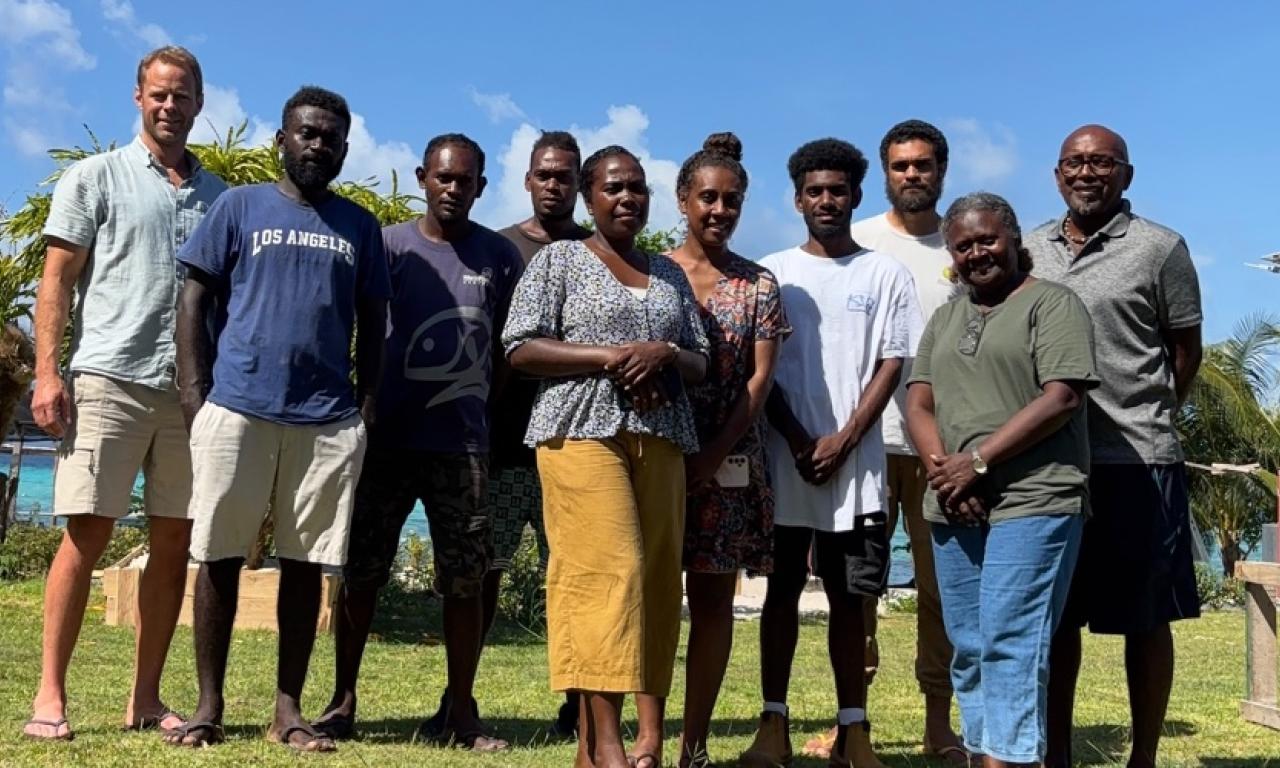
WorldFish and the Solomon Islands National University (SINU) Centre for Island Futures have launched an expanded collaboration to strengthen island food systems, agreeing on a new joint 5-year strategy and a youth-focused program centered at the Nusatupe Innovation Hub.
Staff from SINU CIF and WorldFish completed a 3-day workshop from 28-30 July at Nusatupe Innovation Hub to formalize the partnership’s next phase and shape activities through 2030.
"Activating young people to become future island food system leaders is a substantial challenge and a worthy ambition for our collaboration. Rapid urbanization, disconnection with rural food practices and an epidemic of diabetes and other non-communicable diseases frame the challenges our partnership seeks to engage with,” said Dr Edgar Pollard, Director, SINU Centre for Island Futures.
A formalized partnership already exists between Solomon Islands National University (SINU) and WorldFish. Within this framework the partners collaborate on nature-based solutions to aquaculture, fish handling and food safety. The expanded collaboration broadens this work, placing youth leadership and immersive island food systems training at the centre of joint activities.
Solomon Islands National University established CIF in 2024. This Centre serves as a nexus for collaborative projects, programs, and initiatives aligned with the educational and national development goals of SINU and the Islands Knowledge Institute (IKI). It aims to position the Solomon Islands as a global leader in Indigenous knowledge systems, sustainable island governance, and climate-resilient development. By embedding ancestral wisdom into academic curricula and applied research, the Centre offers unique programs and immersive learning locations that connect students with island communities, their environments, and cultural practices.
In 2025, WorldFish celebrates 40 years of presence and partnership in the Solomon Islands. While a central research emphasis on aquatic foods continues, a newly established program on Island Food Systems (IFS) expands the scope and ambition. IFS brings together research, youth engagement and practical training through the Nusatupe Innovation Hub, including new scientific approaches to island food system assessment and planning.
The program on Island Food Systems is positioned within the new CGIAR Food Frontiers and Security Science Program. The Australian government invested in the Island Food System program through a targeted contribution to the CGIAR trust fund by the Australian Centre for International Agricultural Research (ACIAR).
“We’re pleased to formalize this expanded partnership with WorldFish in support of the Centre for Islands Futures at SINU. This collaboration brings valuable resources and expertise that will strengthen CIF’s role in advancing research, innovation, and sustainable solutions for island communities. We look forward to working together to create lasting impact for the Solomon Islands and beyond, ” said Prof Transform Aqorau, Vice-Chancellor Solomon Islands National University.
The team recently met at Nusatupe island in Western Province to plan activities in 2025 and to set out a 2030 strategy. The Nusatupe Innovation Hub is currently operating a youth focused fellowship program. Fellows are immersed in daily activities, participating in food system training and hands-on demonstration activities (e.g. food gardening, environmental restoration, community-based resource management).
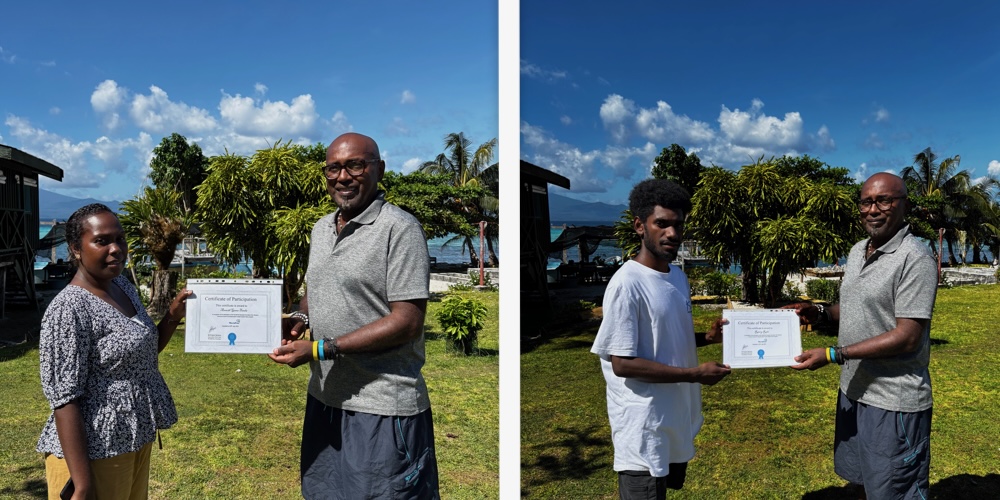
WorldFish is also working with Kastom Gaden Association, which has a staff member based at the station supporting with trainings on food gardening. The innovation hub is part of the national research and development system, and was recently showcased by the Honourable Mr Bradley Tovosia, Minister for Fisheries and Marine Resources at the UN Ocean Conference as “a beacon of sustainable island food systems rooted in Pacific culture, collaboration, and innovation.
The new collaboration has already kicked off, with CIF Fellows contributing to the immersive program at Nusatupe.
“The Nusatupe Innovation Hub spans a wide range of activities. We never focus on only one activity but move between many different things. Some days it is coral planting, the next day it is training in seaweed farming, or deploying fish aggregating devices with Western Province Fisheries Officers. This is an actual “innovation hub” I can also share my own thoughts and ideas and am encouraged to test them,” said Kent Sotutu, SINU CIF Fellow from Simbo.
At the recent meeting, the team decided that during 2025 the collaboration will focus on supporting a further two cohorts of CIF Fellows and on developing a CIF-led enrolment and immersion site curriculum, as well as hosting an Island Food Masterclass at Nusatupe in November.
The planning and learning from these activities form the foundation for a structured strategy towards 2030 – with big ambitions. The 5-year strategy will be published during 2025. It is anticipated that the collaborative work in Solomon Islands is scalable to other Pacific Island countries and that CIF is charting a path of locally led island futures.
“We bring complementary strengths to common goals. Together we are strengthening national research and development systems in the Pacific with a focus on young people and their ability to be leaders in island food futures,” said Prof Hampus Eriksson, Island Food System Program Lead, WorldFish and CGIAR.