
Eunice Ayo-Aderele
The 2025 annual workshop of the Development and Scaling of Sustainable Feeds for Resilient Aquatic Food Systems in Sub-Saharan Africa (FASA) project convened in Nairobi, Kenya in November 2025, bringing together research teams, scaling experts and regional partners to map out Years 4 and 5 of an ambitious effort to transform aquaculture through sustainable, locally available, affordable fish feed solutions. The workshop showcased the project’s progress across countries of implementation, highlighted digital innovations designed for feed millers and farmers, and reaffirmed the project’s commitment to evidence-driven development.
The workshop reported on the project as it transitions from foundational research to implementation, reaffirming a shared commitment to innovation, inclusivity, and sustainability in aquaculture.
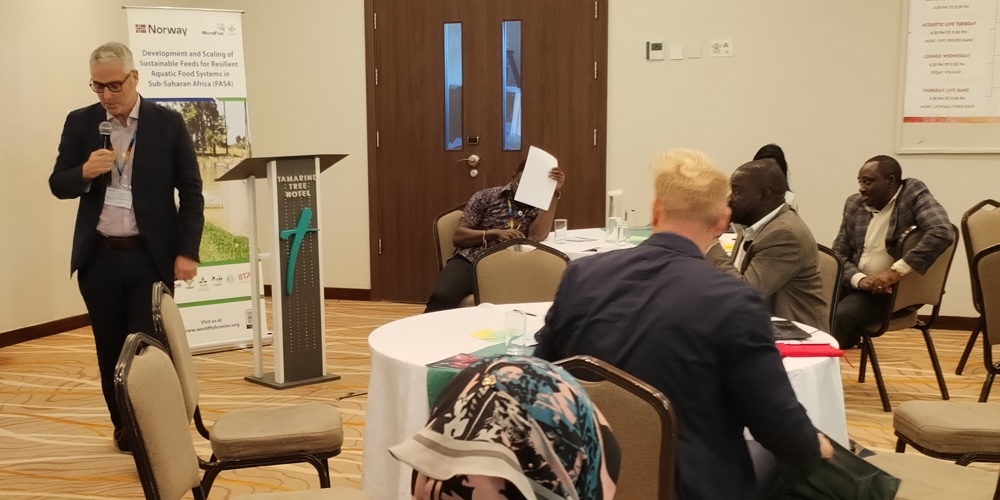
Opening the workshop, WorldFish Senior Scientist, Dr. Matthew Owen, captured the ambition driving FASA:
“Our goal is to develop low-cost, highly nutritious fish feeds based on novel ingredients and enable 5,000 smallholder fish farmers in three African countries to adopt these feeds, leading to increased income, improved food security, and reduced waste and pollution.”
This vision reflects the urgency of addressing feed costs, which account for up to 70 percent of production expenses, and the need for locally sourced alternatives that reduce environmental impact.
Scientific Progress and Innovation
Year 3 achievements laid a strong foundation for the next phase. Research teams in Kenya, Nigeria, and Zambia completed critical nutrient optimization experiments for tilapia and catfish, focusing on methionine, lysine, and omega-6 fatty acids. In Kenya, these trials, which incorporated black soldier fly larvae-based diets, demonstrated the potential of insect protein as a sustainable feed ingredient.
Dr. Chrysantus Mbi Tanga of ICIPE explained, “We have conducted eight experiments focusing on nutrient optimization for tilapia and catfish, with ingredient improvement trials using fermentation and thermal treatments.”
These findings will inform precise feed formulations tailored to local species, improving efficiency and reducing costs.
In Malaysia, tilapia digestibility studies have advanced significantly, with 35 of the 40 locally sourced ingredients identified within the three project countries (Nigeria, Kenya, and Zambia) being tested. The ingredients include insect meals, oilseed cakes, and agro-industrial by-products. The results revealed high ingredient digestibility values for insect-based proteins, while agricultural waste products such as tea waste showed lower digestibility, indicating the protein is less bio-available for the fish.
Standardization Remains a Cornerstone of FASA’s Research Approach
Research Fellow, Aquatic Food System at WorldFish, Ahmad Fatan Nurulhuda, highlighted that “all trials are performed under standardized conditions using GIFT tilapia,” ensuring data comparability across Kenya, Nigeria, and Malaysia. This harmonization is expected to strengthen the global applicability of findings and accelerate the development of practical solutions.
Complementing the scientific discussions, CORAF presented the regional strategic roadmap covering Years 4 and 5, outlining a major effort that includes validating nine novel feeds, conducting on-farm pilots, publishing nutrient studies, building digital databases, and expanding mass-media outreach. The roadmap underscored the project’s multi-country commitment to strengthening farmers’ capacity, noting that more than 2,000 farmers are targeted to be reached through training and demonstrations.
Digital Transformation and Scaling Pathways
Beyond laboratory breakthroughs, the Nairobi workshop spotlighted digital innovations designed to bridge research and practice, with practical feed formulation tools under development. This tool aims to make cutting-edge science accessible to those who need it most, reducing dependency on imported fish feed and empowering local producers.
Scaling strategies were another focal point. Dr. Murat Sartas of IITA underscored the complexity of moving from innovation to adoption, stating,
“Successful scaling and impact requires ensuring three key achievements: effective demand, technical excellence, and unrestricted use”.
These insights will guide FASA’s efforts to embed solutions within farmer cooperatives, private enterprises, and policy frameworks.
Gender, Inclusion, and Social Equity
Inclusivity is integral to FASA’s mission. Emmanuel Kodwo Mensah of Includovate reminded participants that,
“a critical part of this project is ensuring that our efforts are gender-inclusive and promote social equity.”
Through the Gender and Inclusive Development Action Plan (GIDAP), stakeholders have engaged in training sessions that integrate gender-sensitive practices into aquaculture systems. These efforts aim to ensure that women and marginalized groups benefit equally from technological and economic opportunities created by the project.
Climate, Environment, and Sustainability
The workshop also addressed the intersection of climate change and aquaculture. NAGI Enterprises presented findings from lifecycle assessments (LCA) of fish feeds in Kenya, Nigeria, and Zambia, revealing transportation as the largest contributor to emissions—accounting for nearly 65 percent—due to reliance on diesel-powered logistics and fossil fuel-intensive imports. Ingredient sourcing added another 30 percent, underscoring the carbon footprint of current feed systems. Facilitator Angela Samundengo summarized the challenge, stating,
“Our goal is to co-create pathways that make fish feed systems not only sustainable but climate-smart.”
Climate variability is already reshaping aquaculture landscapes. Data showed drought occurrences rising from 36.4 percent in 2019/2020 to 88.8 percent by 2023/2024, disrupting feed ingredient production and driving up costs. Mzime Ndebele-Murisa captured the urgency of this trend, noting,
“Drought is not just a seasonal inconvenience; it is the single most significant threat to fish feed production.”
Participants discussed adaptive strategies, including localizing ingredient production, transitioning to renewable energy sources, and improving waste management practices. Emmanuel Mensah reinforced the need for integrated resource management, stating, “Water is consistently the most threatened resource, and its vulnerability underlines the need for integrated resource management in aquaculture.”
Looking Ahead: The Final Push
Across the presentations, a common thread emerged: FASA is moving from intensive foundational research toward wider validation, digital transformation, and scaling with partners.
By combining technical breakthroughs with gender-responsive approaches and robust scaling strategies, the project is poised to deliver lasting impact on food security, livelihoods, and environmental sustainability.
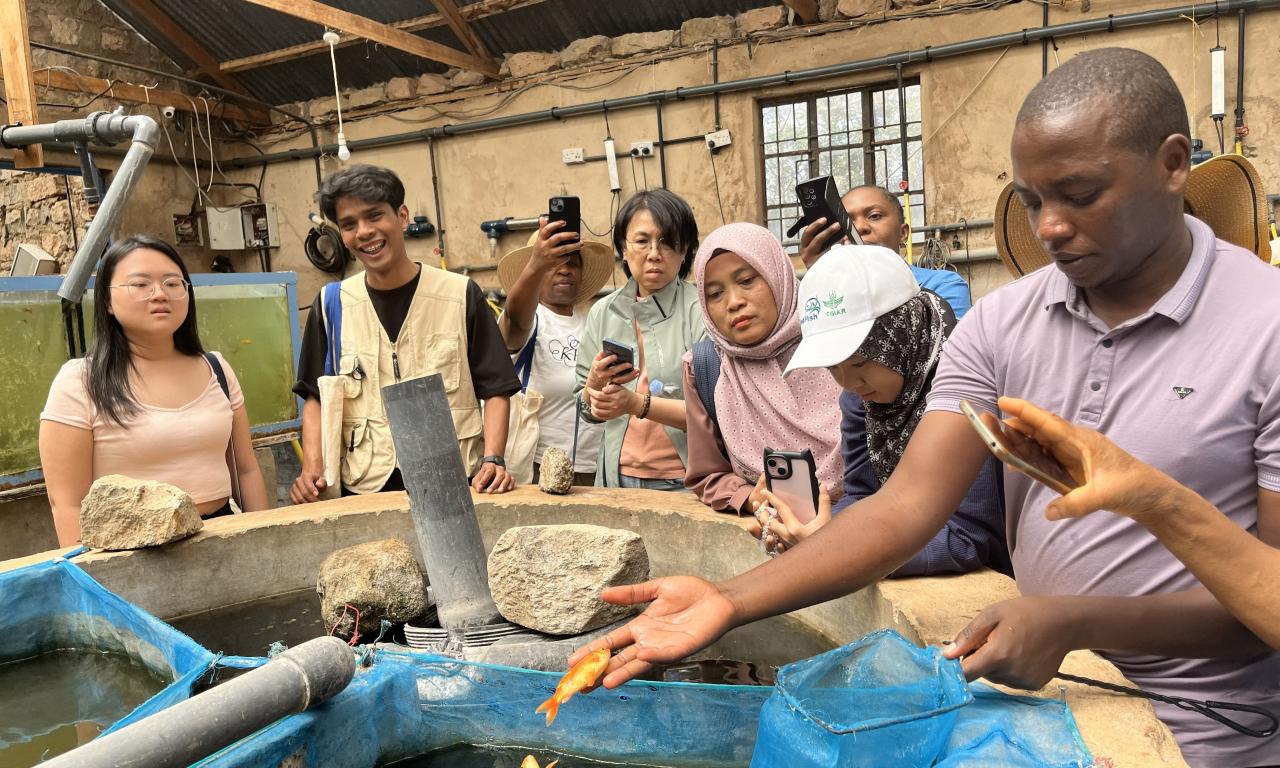
Cover photo: Participants of the FASA annual workshop visiting Kamuthanga Fish Farm in Nairobi, Kenya. Photo: Eunice Ayo-Aderele.